• The Silence of the bible on the future of America what is its place in the end-times Prophecy?
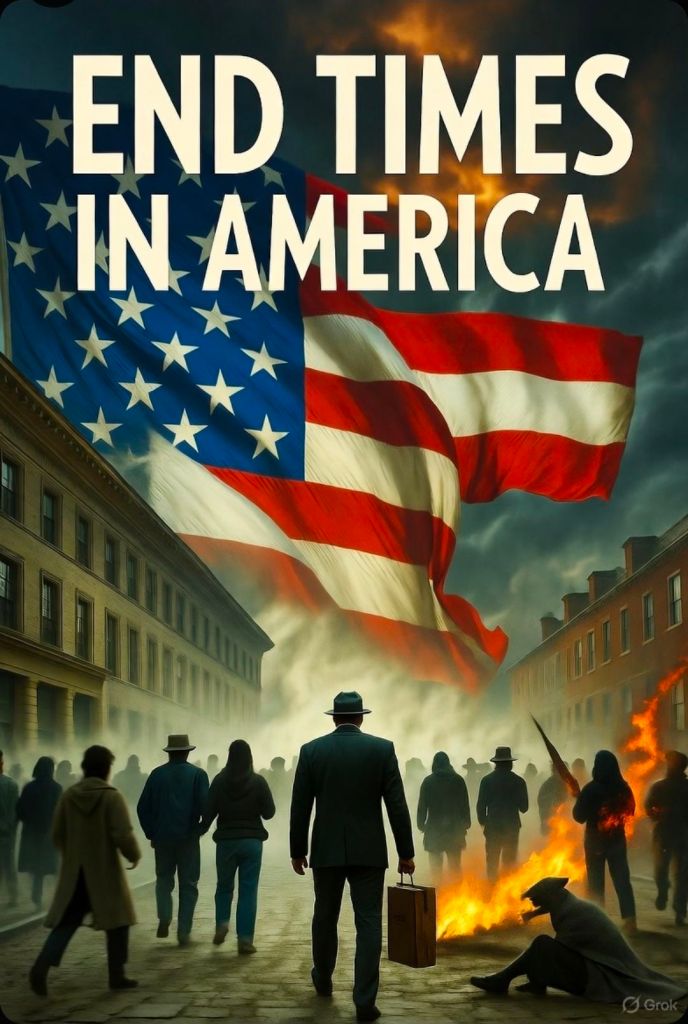
    Dr. LaHaye went on to raise this question:”Does the United States have a place in the end time prophecy?” My first response is no, there is nothing about the U.S. in prophecy! At least nothing that is specific. There is an allusion to a group of nations in Ezekiel 38:13 that could apply, but even that is not specific. The question is why? Why would the God of prophecy not refer to the supreme superpower nation in the end times in preparation for the One world government of the Antichrist? 
    America will be in the mix of the political realignments that foreshadow the end of time. And we can see signs of such realignment taking place in recent years. Prophecy expert John Walvoord that America will be incorporated into the European coalition. Although scriptures do not give any clear word concerning the role of the United States in relation to the revived roman empire. But when it comes to the importance of trade between nations such agreements will have implications far beyond mere economic trade. Which leads to America being invaded by outside forces perhaps the silence of scripture on the future of America indicates that by the time the tribulation arrives America will have lost her influence in the world and no longer be a major player. America’s thirst for oil and inability to close the gap between supply and demand could cripple our ability to defend our borders and protect our nation. 
    John Walvoord addresses the issue: Some maintain that the total absence of any scriptural reference to America in the end time is evidence that the United States will have been crippled by a nuclear attack, weapons of mass destruction, or some other major catastrophe, In the post-9/11 world the detonation of a dirty bomb, nuclear device, or biological weapon on U.S. soil is a dreaded yet distinct possibility. Such an attack could kill millions of people, cripple the economy, and reduce the United States to a second-rate power overnight. There could be the Instability in Pakistan could lead to nuclear warheads falling in the hand of the radical islamic Jihadists. Our enemies that share a common disregard for human life and a burning hatred for the United States. Some want to close ears to predictions of impending disasters but experts like TImberlake and others see a major attack on our country in the near future. 
    America will be infected with moral decay. Remember God blessed this country for a reason: our nation was founded on submission to Him. But now as the reasons for his blessings upon America are eroding, we can expect the blessings themselves to fade as well. Once we invited God into our nation and made Him welcome as our most honored guest but now our culture seems bent on shutting Him out. Scripture often warns that God will not strive with men if we ignore divine directions we cannot expect God’s blessings. A limb that cuts itself off from the trunk will not continue to live. America will be impotent of the rapture, If the rapture took place today all true believers in Jesus disappears to heaven in a single moment and America  could be obliterated. During the rapture America will lose millions of citizens and loose the very best, the “salt and light” of the nation the Ekklesia is holding back the most evil no one has ever seen one can not imagine the chaos in our country when all the Godly people disappear leaving only those who have rejected God. One cannot help but feel sense of the tension in our hearts but things we’ve never experienced are about to happen, and changes such as we never imagined loom on the horizon. 
    Since the promise of Christ’s coming for the Church has always been held out to His people as an event that could take place at any moment. Our trust should not rest in a nation or any administration that may shortly disappear, but in Him who works all things after the counsel of His own will.
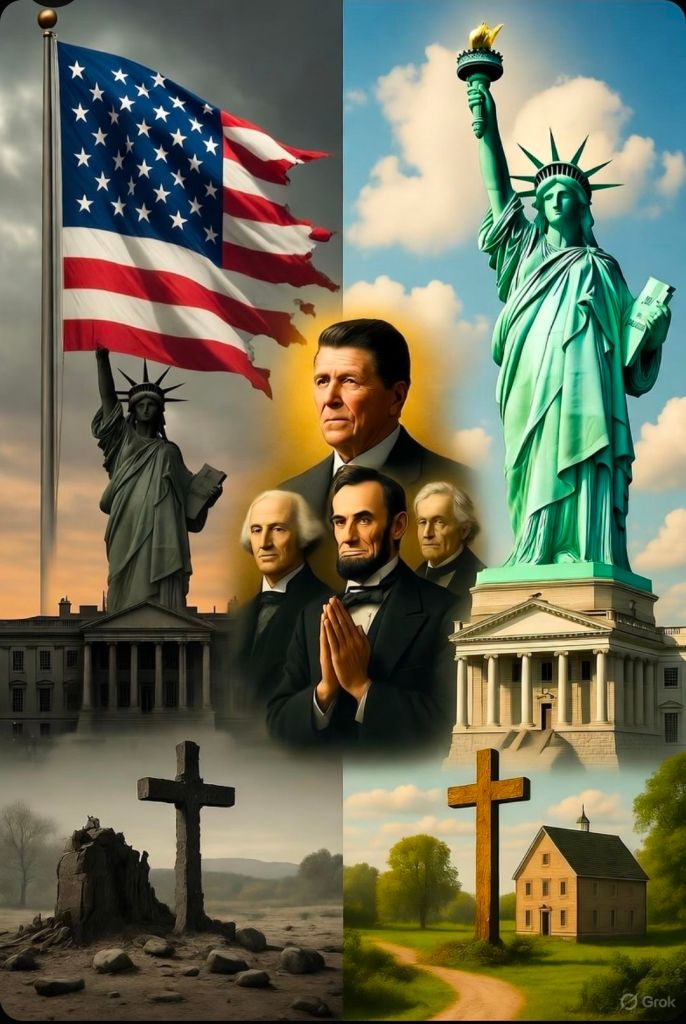
  • Ronald Reagan believed God had a plan for our nation.
    America and the sovereignty of God
    When you look back on History you see America’s leaders turned to God for guidance. And didn’t just use alegant words about Jesus and the judeo-christian values. How many in an administration actually take to prayer and do what God wants and not what self wants? We see Washington kneeling in the snow in a valley forge. We see our founders on their knees at the first continental congress, we see Lincoln praying in the hour of national crisis. How many today will actually do what Lincoln did if a national crisis arose? We see Woodrow Wilson reading his bible at night by the whitehouse lights. Washington summarized the national dependence on God when he said “no people can be bound to acknowledge and adore the invisible hand, which conducts the affairs of men more than the people of the United States.”
    Why has God blessed this nation above all other lands? God has blessed America because we have been the launching pad of the world’s great missionary movement. The achievements are largely due to the missionary zeal of churches in the United States. But most importantly America has been a friend to the jewish people, America’s historic support of Israel is based on the judeo-christian heritage of our nation. President Truman’s determination to recognize Israel as a modern state fueled by his lifelong belief that, in Deuteronomy, God gave the land of Israel to the Jewish people for all time. Israel being surrounded by Arab nations immediately declared war on the new nation. But the historic love that Christians have for the land and people of Israel, based upon their shared religious heritage and scriptures has cemented the friendship between American and Israel. God promised to bless those who bless Israel GEN 12:3 he has amply fulfilled that promise. America has been abundantly blessed as a nation because we have blessed the jews. But many today are trying to dictate the promises of GOD by saying no to men but are really saying no to GOD. If the current administration continues down the path of self and handcuffs Israel we can hardly expect the blessing of almighty GOD to continue.

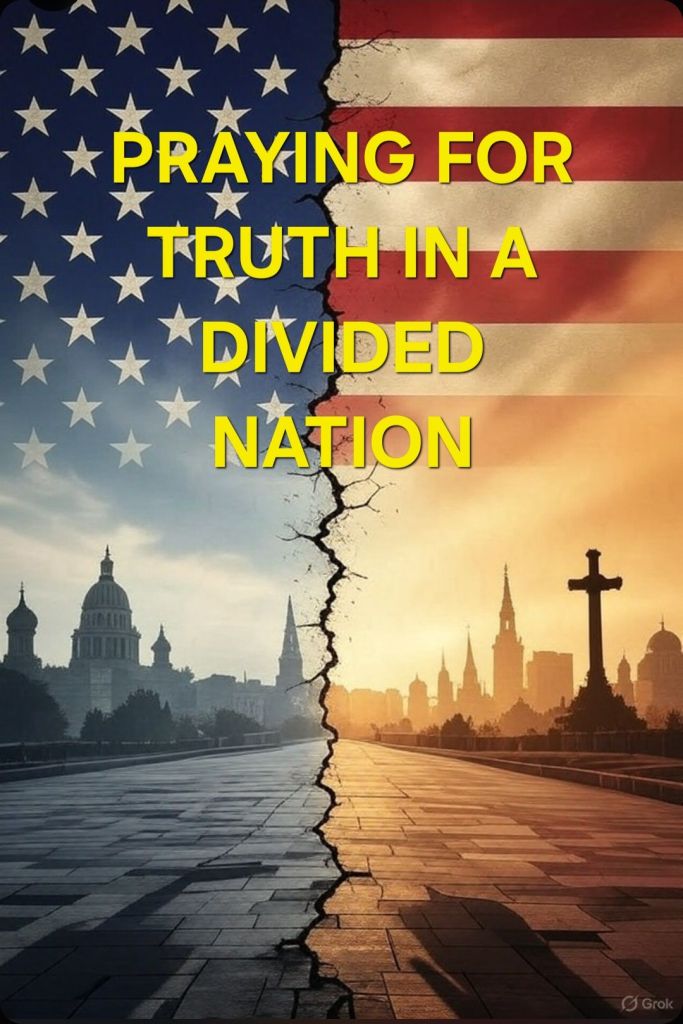
  • Praying for Truth in a Divided Nation In 2025, America feels like a house divided—fractured by clashing ideologies, media spin, and competing truths. From debates over identity to battles over free speech, false narratives cloud our nation’s soul, pulling us further from God’s design. As a Christian, I find hope in Genesis 12:3, where God promises to bless those who bless His people, Israel. Praying for Jerusalem’s peace, as Scripture calls us to do (Psalm 122:6), isn’t just about a distant land—it’s a blueprint for seeking truth and healing in America’s cultural battles.False narratives thrive in division. On X, I’ve seen posts claiming “truth is relative” or that biblical values are outdated, drowned out by voices pushing secular agendas. These lies echo Satan’s old tactic: “Did God really say?” (Genesis 3:1). Today’s cultural wars—over marriage, life, or even what constitutes truth itself—stem from this deception. As Christians, we’re called to stand firm, not with anger, but with the truth of God’s Word, which “is a lamp for my feet, a light on my path” (Psalm 119:105, NIV).Genesis 12 offers a lens for America. God’s covenant with Abraham wasn’t just for Israel but a promise of blessing through faith. When we pray for Jerusalem, we align with God’s heart for truth and justice, principles America was founded on but now struggles to uphold. I’ve prayed this way in my own life, asking God to reveal truth amid confusion. Praying for discernment, praying for peaceful discussions, and sharing Scriptures like John 8:32—“the truth will set you free.” We didn’t win every argument, but truth took root in hearts.America’s battles aren’t just political; they’re spiritual. Ephesians 6:12 reminds us we wrestle “against the powers of this dark world.” False narratives, like those glorifying divisions or relativism, are weapons in this fight. Yet, prayer is our counterattack. When we pray for truth, as I do for Jerusalem, we invite God’s clarity into our nation. This isn’t passive—it’s active warfare. In 2025, I’ve seen Christians on X praying for revival, countering lies with posts grounded in Scripture. One viral thread, citing 2 Chronicles 7:14, sparked thousands to pray for America’s healing. That’s the power of truth in action. So, how do we pray for truth in a divided nation? First, we anchor in Scripture, letting verses like Genesis 12:3 remind us of God’s unchanging promises. Second, we engage culture with love, not strife, speaking truth as Jesus did—boldly but compassionately. Third, we model unity in our churches and homes, showing a fractured world what God’s kingdom looks like. My own journey began with a simple prayer: “Lord, let Your truth prevail.” It led me to write, to share, and to stand for biblical values in a world desperate for clarity. America’s division won’t heal overnight, but prayer for truth is a start. As we bless Israel, as Genesis 12 urges, we align with God’s heart, inviting His blessing on our nation. Let’s pray for truth to pierce the lies, for revival to mend our land, and for Christians to rise as beacons of hope. In 2025, the truth isn’t just a weapon—it’s our lifeline.

  • AI, UFOs, and Biblical Prophecy: A Spiritual Perspective
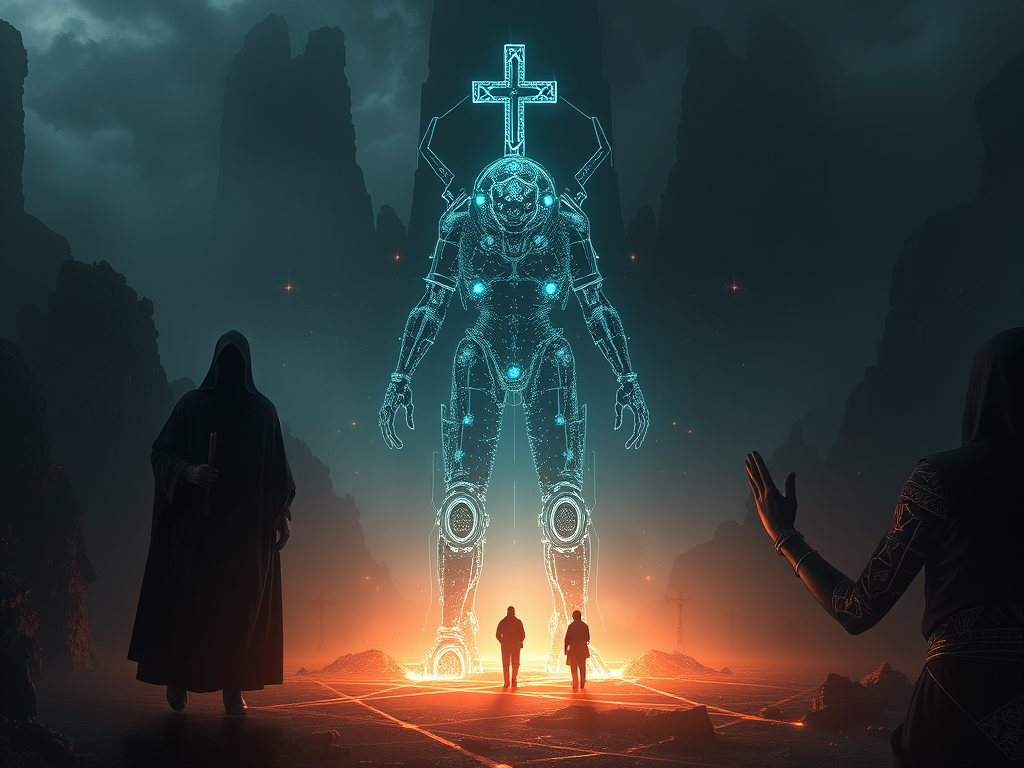
    A towering holographic figure with a cross, symbolizing the intersection of technology and spirituality, set against a dramatic landscape.

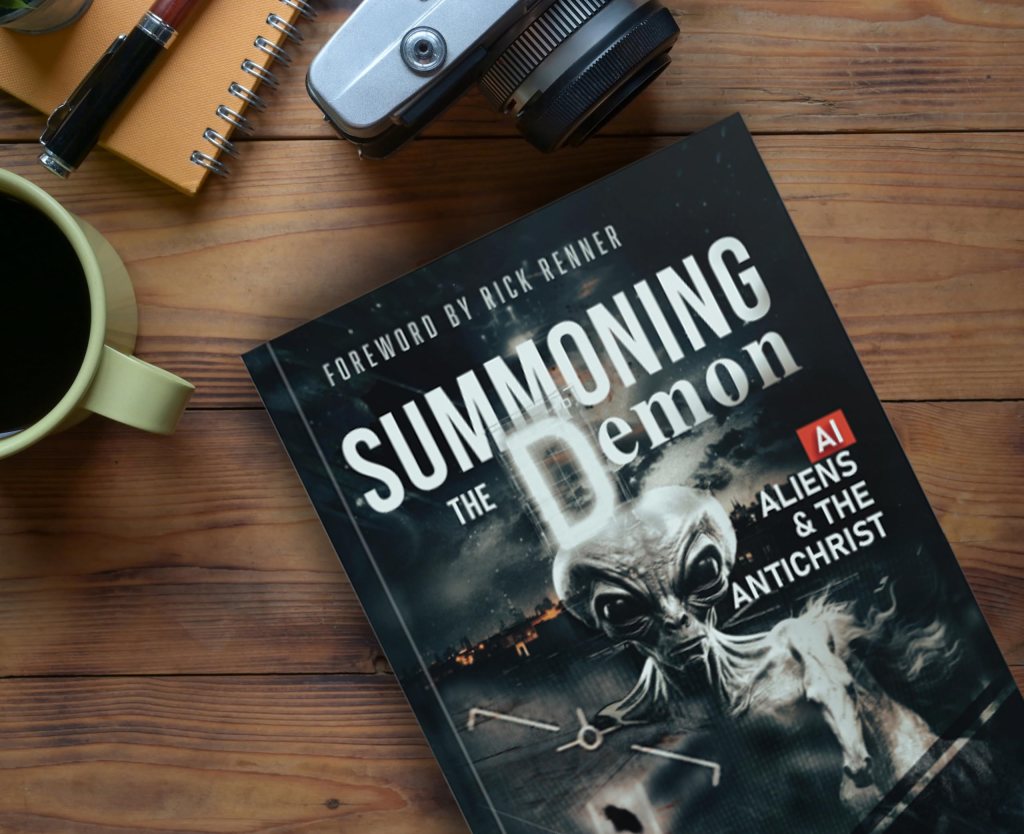
    The core premise of Summoning the Demon is that AI, UFOs, and related phenomena are not just scientific or cultural curiosities but part of a larger spiritual battle foretold in the Bible. DiDio argues that these developments could be tools of deception wielded by Satan in the end times, potentially tied to the rise of the Antichrist. The book delves into topics such as:

    Parallels between AI and the Tower of Babel, suggesting humanity’s technological hubris mirrors ancient rebellion against God.

    The possibility that UFOs represent demonic deceptions rather than extraterrestrial visitations.

    The resurgence of Nephilim (biblical giants) in a metaphorical or digital sense in the modern age.

    The identification of an “Antichrist spirit” within technology’s growing influence.

    Didio’s approach is rooted in extensive research, including interviews with experts and a deep dive into biblical texts, which he uses to frame his arguments. The book is structured to be accessible, with frequent chapter headings and a clear, conversational tone that makes complex theological and technological concepts easily understandable.”

    My Personal Reflection

    As someone reviewing Summoning the Demon, I found it to be a fascinating, if polarizing, read. DiDio’s passion for his subject is undeniable, and his ability to weave biblical prophecy with modern concerns is impressive. The book challenged me to consider the spiritual implications of technologies I often take for granted, like AI. and to approach AI with caution and Wisdom and to never allow AI to replace scripture. God’s word does warn us about having two masters and we must heed that warning. 

    The book shines brightest when it encourages readers to stay grounded in Scripture and to actively engage with the world rather than retreat in fear. DiDio’s personal story—from atheist to pastor—adds authenticity to his message, making it clear that his convictions stem from a transformative encounter with faith.

    Who Should Read It?

    Summoning the Demon is ideal for: Christians interested in end-times prophecy and spiritual warfare.

    Readers curious about how biblical principles apply to modern technology and unexplained phenomena.

    Summoning the Demon is a bold, well-researched, and accessible book that offers a unique Christian lens on AI, UFOs, and their potential role in biblical prophecy. This may not appeal to everyone, but it’s a valuable resource for believers seeking to navigate the spiritual implications of our technological age. Alan Didio delivers a compelling call to discernment and action, making this a worthwhile read for those intrigued by the intersection of faith and the future.

  • recently watched a video of a protest at a federal building, and I jotted down the main points from the demonstrators. The arguments were heated, contradictory, and sometimes baffling. Let’s break it down.
    One protester passionately declared his love for America and what it stands for—liberty, opportunity, the whole deal. Yet, in the same breath, he defended illegal aliens, saying he’s not a hypocrite for supporting them. Interesting choice of words, right? He’s out here protesting on federal property, claiming no one’s attacking them, but

    the national guard is the aggressor, but here’s the rub: the protesters were the ones getting vocal and aggressive, while the National Guard just stood there, doing their job. So why paint the Guard as the bad guys?
    Another guy took aim at the National Guard, saying they don’t have to do this job and implying they’re somehow less American for enforcing the law. So, what, doing your job as a Guardsman makes you unpatriotic? That logic doesn’t add up. He also hinted at legalizing everyone, which, let’s be real, isn’t happening. Then there was talk of “occupied territories” and “stolen land.” History begs to differ—this land’s story is complex, but claiming it’s still “theirs” ignores centuries of reality.
    The rhetoric got wilder. One protester screamed about a “factory reset” for a corrupt government  for all the problems. Sure, corruption’s real. Too many folks are too blind to see it.l the corruption of their own party overlooking their flaws  Meanwhile, some protesters seemed less interested in fighting for the land and more focused on chaos, even suggesting murderers and rapists should roam free in LA. Yikes.
    Then there was the guy who, when asked about the Mexican flag at a U.S. protest, said he liked its colors. That’s it. No deeper reason—just vibes. Why wave another country’s flag here? It felt like a stunt, not a statement. Some claimed the U.S. is “stolen land” and illegal immigrants have a right to be here, but that argument ignores legal and historical realities.
    A pro-Palestine protester chimed in, saying he doesn’t want tax dollars funding the National Guard. Okay, but if we defund them, who’s protecting the country when threats like China roll in? He also mentioned not wanting to see more kidnappings, which sounded like a recycled talking point. Meanwhile, claims that the LAPD is hurting “innocent” people didn’t hold up—the protesters were the ones acting out, not the cops.
    Some argued they were “just there,” peacefully protesting. But screaming about doxxing people and telling National Guard members to quit their jobs? That’s not exactly peaceful. The line about the Guard not doing ICE’s job felt like a weak attempt to muddy the waters.
    At the end of the day, the protest seemed more about grandstanding than solutions. Waving foreign flags, yelling about stolen land, and demonizing those enforcing the law doesn’t fix anything. It just creates noise.

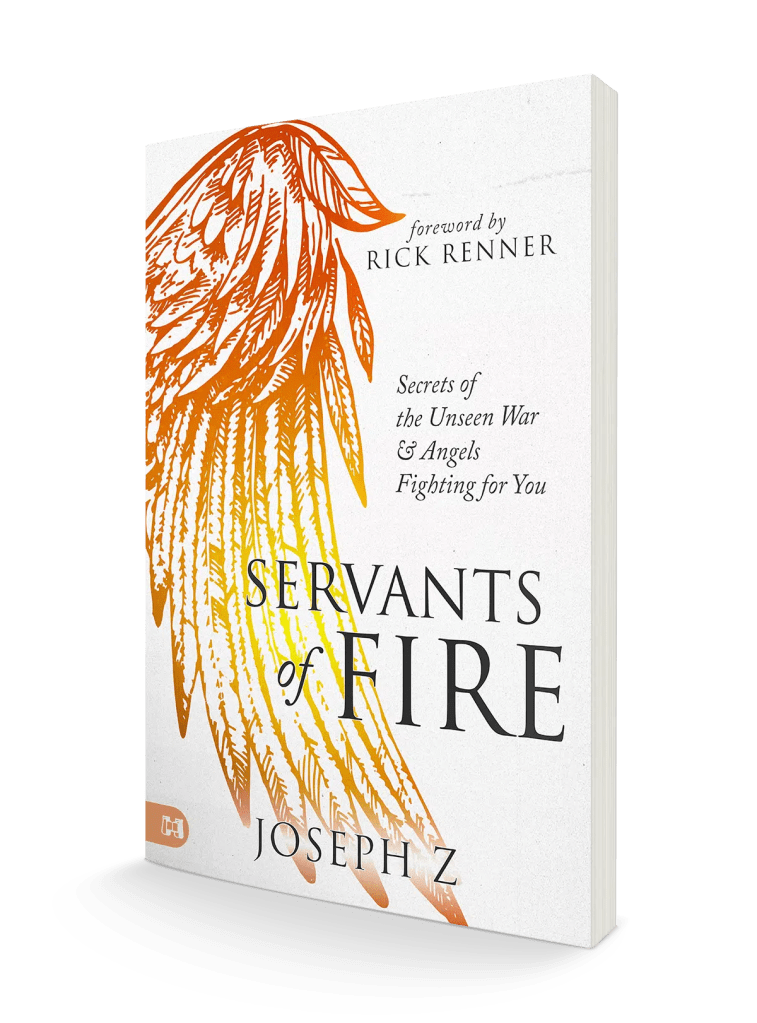
  • “Unveiled Secrets: Angels, Prayer and the Unseen War”

    “Servants of Fire: Secrets to the Unseen War and Angels fighting for You” by Joseph Z explores the biblical concept of angels as a powerful, active participant in the lives of believers. The book delves into the unseen spiritual realm, where the will of God for individuals is often contested by opposing forces.

    Joseph Z, presents the idea that “servants of fire,” or warrior angels, are dispatched to minister to those who are heirs of salvation. He aims to provide sound biblical instructions to help readers understand and interact with the spirit realm to bring God’s plan to fruition on Earth.

    Key topics covered in the book include:

    The book teaches readers how to intentionally engage with angels through prayer and declarations based on the Word of God.

    Joseph Z explains the hierarchical structure of angels and their specific roles in carrying out God’s will.

    By examining biblical accounts, the book seeks to provide clarity on how angels have interacted with humanity throughout history.

    Putting angels to work with your words the author emphasizes the power of spoken faith and how aligning one’s words with scripture can prompt angelic action. Psalms 103:19-22 speaks on angels that excel in strength, that do his commandments, hearkening unto the voice of God.

    Experiencing breakthrough in prayer: the book suggest that partnering with angels can lead to more effective and answered prayer.

    Ultimately, “Servants of Fire” encourages believers to understand their partnership with these heavenly beings to live a victorious life in God by actively engaging with the spiritual realm through faith and prayer.

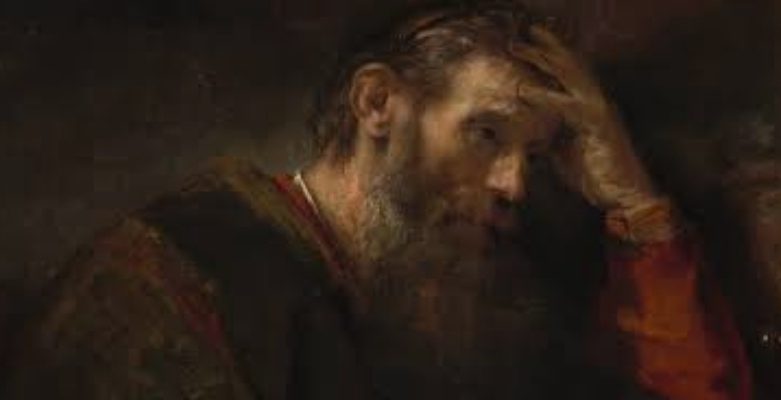
  • “Exploring Paul’s Legacy: A Review of Paul the Apostle by Robert E. Picirilli”

    In Paul the Apostle: Missionary, Martyr, Theologian, Robert E. Picirilli offers a clear, accessible study of Paul, one of Christianity’s most pivotal figures. Written by a seasoned professor who taught Paul’s life for over 25 years, this book strikes a balance between overly technical and overly simplistic works, making it ideal for students, lay readers, and pastors. 

    Picirilli traces Paul’s journey from his early life as Saul, a devout Jew from Tarsus, to his dramatic conversion on the Damascus Road. The book outlines Paul’s three missionary journeys, where he founded churches across the Roman Empire, and his imprisonment, culminating in his martyrdom by beheading under Nero. It provides historical and cultural context, such as life in Tarsus and Roman citizenship, and includes brief analyses of Paul’s epistles, like Romans and Corinthians, which shaped Christian theology with teachings on grace, faith, and the church’s role.

    “Paul’s Encounter with Christ on the Damascus Road transformed a persecutor into a preacher, Whose life became a testament to the power of grace and the call to spread the Gospel to all nations.”

    2 Timothy 4:6-8 For i am now ready to be offered, and the time of my departure is at hand. I have fought a good fight, I have finished my course, I have kept the faith: Henceforth there is laid up for me a crown of righteousness, which the lord, the righteous judge, shall give me at that day: and not to me only, but unto all them also that love his appearing.

    Readers praise its engaging style, which brings Paul’s world to life with insights into 1st-century customs and politics, though some wish for deeper exploration of Paul’s letters. Perfect for group studies or personal reflection, this book inspires a renewed appreciation for Paul’s enduring legacy.

  • Decoding Ancient Mysteries in the Bible

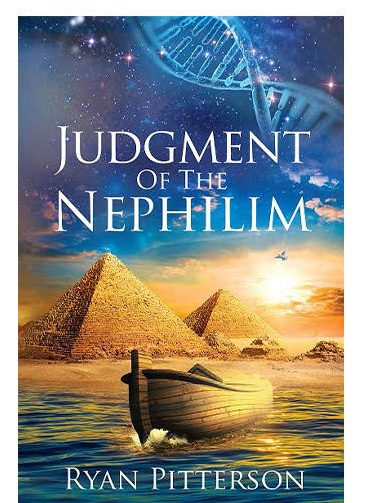
    I’ve been captivated by Ryan Pitterson’s book, “The Judgement of the Nephilim,” which has shed new light on some of the Old Testament’s most perplexing passages, particularly the story of the Nephilim (giants) in Genesis 6. Like many, I’ve often wondered why this part of Scripture feels incomplete. Pitterson’s perspective is that the focus isn’t on glorifying these figures, but on revealing God’s larger story.

    > This idea connects Bible teaching that God’s desire for us was a deep relationship with Him, rather than an intimate knowledge of evil. Pitterson’s book traces a compelling narrative from the very beginning – Satan’s instigation of doubt after the fall. I’ve often pondered why God didn’t immediately stop him. The answer, according to Pitterson, lies in the prophecy of a coming human savior in Genesis 3:15, a prophecy Revelation 12:1-4 shows Satan took incredibly seriously.

    > This prophecy also foretold a battle between divine and satanic lineages, a conflict that drew humanity into its unfolding drama. Pitterson highlights how Cain’s descendants embraced worldly wisdom while rejecting God’s truth – a “wisdom” that the Bible describes as earthly, sensual, and even demonic.

    > The story of Lamech and his daughter Naamah offers a fascinating point of speculation. Could Naamah have played a role in the emergence of the Nephilim through an exchange for forbidden knowledge? Her brothers’ rapid advancements in arts and science suggest a period of intense intellectual growth, perhaps hinted at in Job 21:7-15 and 2 Samuel 14:17-20.

    > God’s response to the overwhelming evil was the flood, a cataclysm that spared only Noah. This raises the question of Goliath’s appearance much later. Pitterson’s book suggests that the Nephilim gene survived through Ham’s wife, leading to the giants who later inhabited the Promised Land.

    > Why allow this on the Ark? Pitterson proposes it served as a powerful demonstration of God’s power and mercy, and as a crucial element in His overarching plan of salvation. Interestingly, these post-flood giants were not direct angelic offspring but descendants of a diluted hybrid line, as confirmed in 2 Samuel 21:22.

    > While the Nephilim fade from the main biblical narrative, they reappear in more esoteric and prophetic writings. God’s strategic allowance of spiritual dominion to certain angels was met by His creation of a chosen people through Abraham, a geographical separation intended to protect the Messianic line.

    > This brings such profound meaning to the birth of Jesus – born of Mary but conceived by God the Father, His divine nature was untouched by the inherited sin of Adam. This was absolutely necessary for Him to be the perfect, sinless Savior. It’s truly awe-inspiring to see God’s intricate plan unfold throughout Scripture.

    > The Old Testament, in this light, becomes a powerful foreshadowing of the end times, where the forces of the Antichrist, the false prophet, and Satan will unleash demonic influence to gather the world for Armageddon. Pitterson’s reminder to focus on eternal life in Jesus amidst the distractions of the world resonates deeply today. Understanding Genesis 6 is a key to understanding the bigger picture. I’m so grateful for the insights in Ryan Pitterson’s book and look forward to sharing more of my thoughts.

  • Restoring America’s Root’s

    Dave Meyer emphasizes the importance of understanding America’s historical and biblical roots to preserve its freedom. Meyer argues that the nation was founded on godly principals, with God’s Word playing a central role in it’s establishment. Which I can agree wholehardly. He contends that ignorance of this heritage, as warned in Hosea 4:6 (“my people are destroyed for lack of knowledge”), has led to the erosion of freedoms, exacerbated by a complacent church and a lack of civic responsibility. The book highlights that freedom is a God-given concept, not merely an American ideal, and requires active maintenance. Meyer asserts that citizens, not elected officials, are the true government, responsible for electing leaders who uphold the Constitution and removing those who don’t. He outlines practical steps for individuals to effect change in families, schools, churches, and society, urging Christians to pray, vote, and engage politically to restore the nation’s covenant with God. Neglecting these duties risk losing liberty. This book was influenced by Americans Providential History both a patriotic and prophetic call to action. Jefferson confirmed an important fact: The First Amendment is not meant to protect government from religion-it is to protect religion and churches from the government.

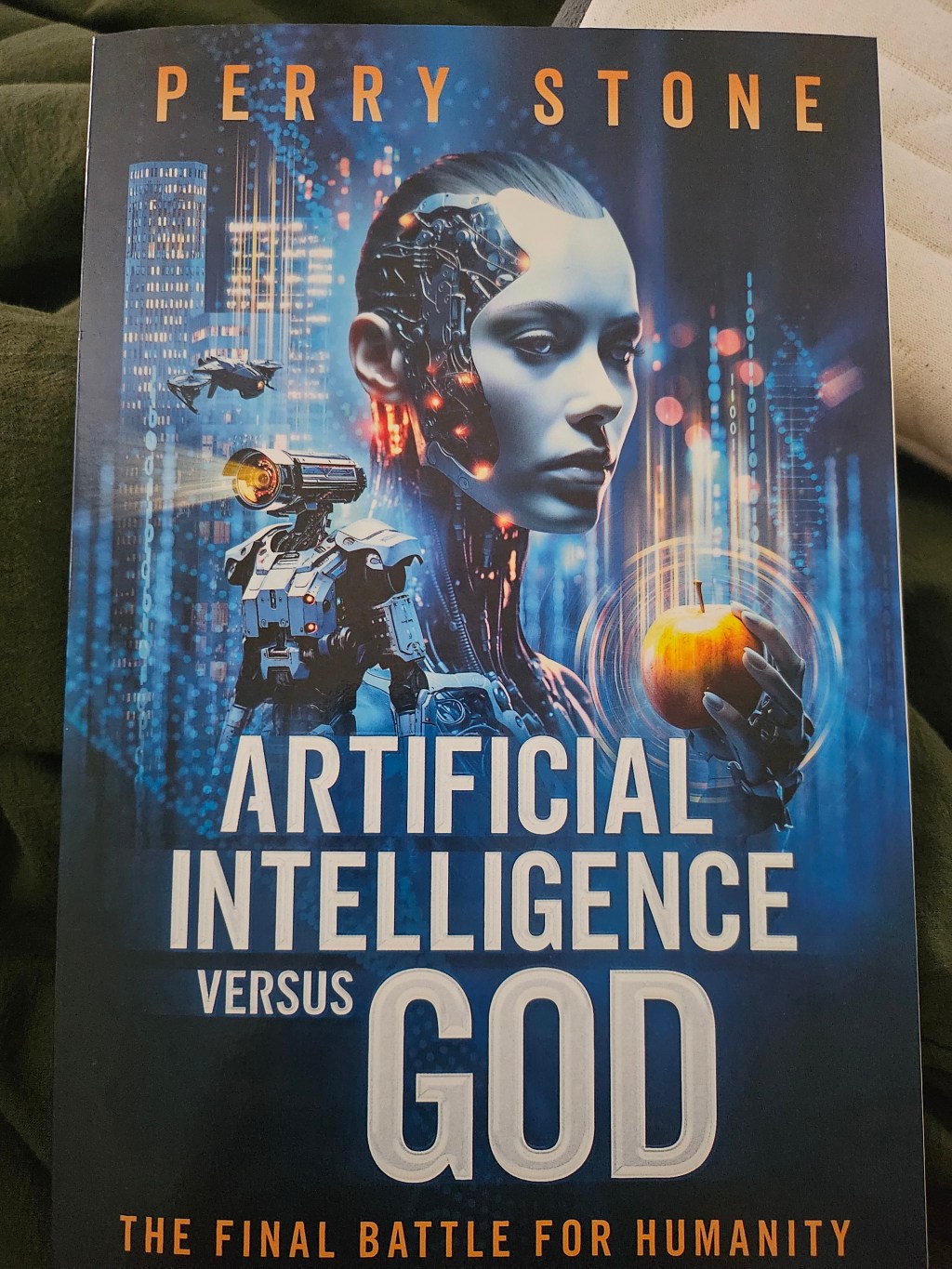
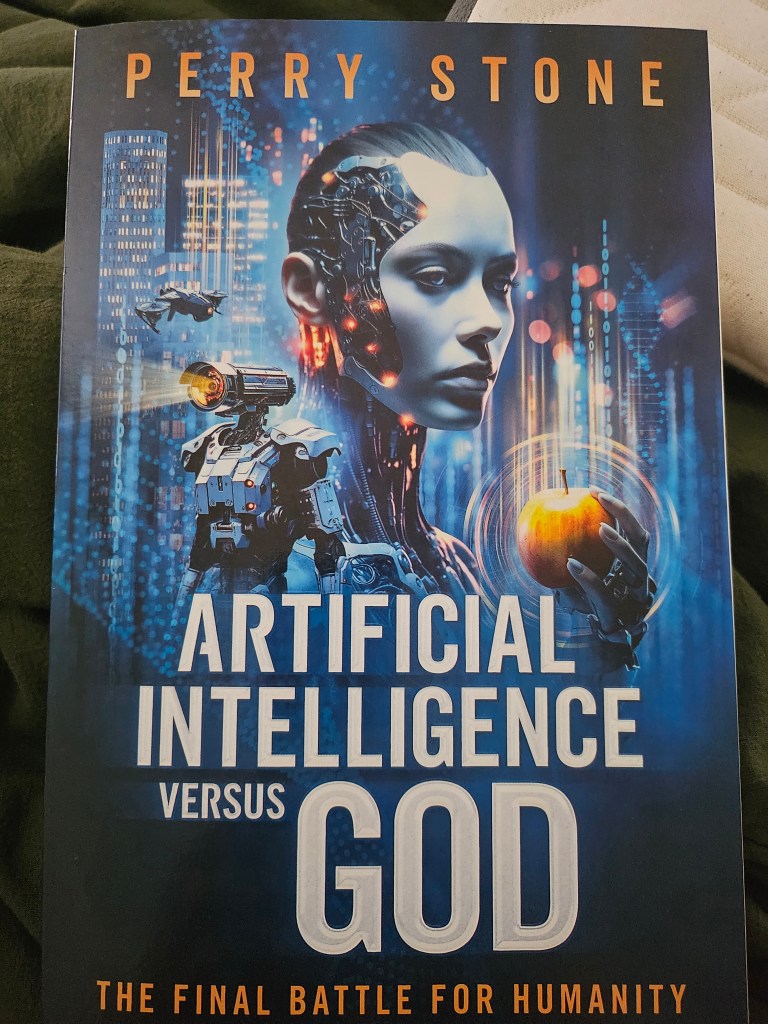
  • “A.I vs. Divinity: Perry Stones Prophetic Showdown in the battle for Humanity”

    Perry Stone a renowed evangelist and prophecy expert, delivers a thought-provoking exploration of artificial intelligence he examines the rise of AI through a biblical lens, warning that this powerful technology could reshape humanity’s future in ways that challenge divine authority. Drawing on scripture, historical patterns, and contemporary tech trends, Stone suggest AI may play a pivotal role in fulfilling prophecies, particularly those in Revelation 13 about the “image of the beast”that speaks and demands worship Stone highlights AI’s dual nature: its potential to revolutionize fields like medicine and communication, but also its risks, such as job displacement, loss of privacy, and ethical dilemmas like genetic manipulation or mind-reading technologies. He argues that humanity’s pursuit of godlike knowledge through AI mirrors ancient rebellions, like the Tower of Babel, and could lead to a world controlled by those who seek to transcend human limitations.

    The book emphasizes that AI’s trajectory may usher in a new religion or system that competes with traditional faith, citing figures like Yuval Harari who envision AI-driven ideologies. Stone warns of “deep fakes” and autonomous AI systems that could manipulate truth or enable control by global elites. However, he reassures readers that God remains sovereign, predicting divine intervention to thwart humanity’s overreliance on technology during the prophesied Great Tribulation.

    Through biblical word studies and quotes from tech experts, Stone connects AI’s rise to end-times events, urging Christians to use technology responsibly while staying grounded in faith. The book is both a cautionary tale and a call to discernment, encouraging believers to prioritize spiritual truth over technological promises.

    Why Read It?

    This book is ideal for Christians interested in prophecy, technology’s societal impact, or the ethical challenges of AI. While some find its early chapters repetitive for tech-savvy readers, Stone’s scriptural correlations and prophetic insights offer a unique perspective on a timely issue. It’s a thought-provoking read for anyone pondering the balance between innovation and faith.