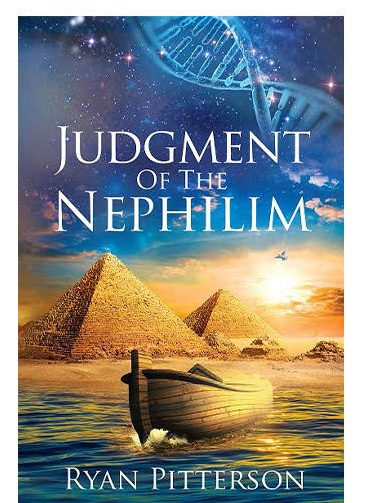
I’ve been captivated by Ryan Pitterson’s book, “The Judgement of the Nephilim,” which has shed new light on some of the Old Testament’s most perplexing passages, particularly the story of the Nephilim (giants) in Genesis 6. Like many, I’ve often wondered why this part of Scripture feels incomplete. Pitterson’s perspective is that the focus isn’t on glorifying these figures, but on revealing God’s larger story.
> This idea connects Bible teaching that God’s desire for us was a deep relationship with Him, rather than an intimate knowledge of evil. Pitterson’s book traces a compelling narrative from the very beginning – Satan’s instigation of doubt after the fall. I’ve often pondered why God didn’t immediately stop him. The answer, according to Pitterson, lies in the prophecy of a coming human savior in Genesis 3:15, a prophecy Revelation 12:1-4 shows Satan took incredibly seriously.
> This prophecy also foretold a battle between divine and satanic lineages, a conflict that drew humanity into its unfolding drama. Pitterson highlights how Cain’s descendants embraced worldly wisdom while rejecting God’s truth – a “wisdom” that the Bible describes as earthly, sensual, and even demonic.
> The story of Lamech and his daughter Naamah offers a fascinating point of speculation. Could Naamah have played a role in the emergence of the Nephilim through an exchange for forbidden knowledge? Her brothers’ rapid advancements in arts and science suggest a period of intense intellectual growth, perhaps hinted at in Job 21:7-15 and 2 Samuel 14:17-20.
> God’s response to the overwhelming evil was the flood, a cataclysm that spared only Noah. This raises the question of Goliath’s appearance much later. Pitterson’s book suggests that the Nephilim gene survived through Ham’s wife, leading to the giants who later inhabited the Promised Land.
> Why allow this on the Ark? Pitterson proposes it served as a powerful demonstration of God’s power and mercy, and as a crucial element in His overarching plan of salvation. Interestingly, these post-flood giants were not direct angelic offspring but descendants of a diluted hybrid line, as confirmed in 2 Samuel 21:22.
> While the Nephilim fade from the main biblical narrative, they reappear in more esoteric and prophetic writings. God’s strategic allowance of spiritual dominion to certain angels was met by His creation of a chosen people through Abraham, a geographical separation intended to protect the Messianic line.
> This brings such profound meaning to the birth of Jesus – born of Mary but conceived by God the Father, His divine nature was untouched by the inherited sin of Adam. This was absolutely necessary for Him to be the perfect, sinless Savior. It’s truly awe-inspiring to see God’s intricate plan unfold throughout Scripture.
> The Old Testament, in this light, becomes a powerful foreshadowing of the end times, where the forces of the Antichrist, the false prophet, and Satan will unleash demonic influence to gather the world for Armageddon. Pitterson’s reminder to focus on eternal life in Jesus amidst the distractions of the world resonates deeply today. Understanding Genesis 6 is a key to understanding the bigger picture. I’m so grateful for the insights in Ryan Pitterson’s book and look forward to sharing more of my thoughts.

 Truth&EverythingInBetween
Leave a comment